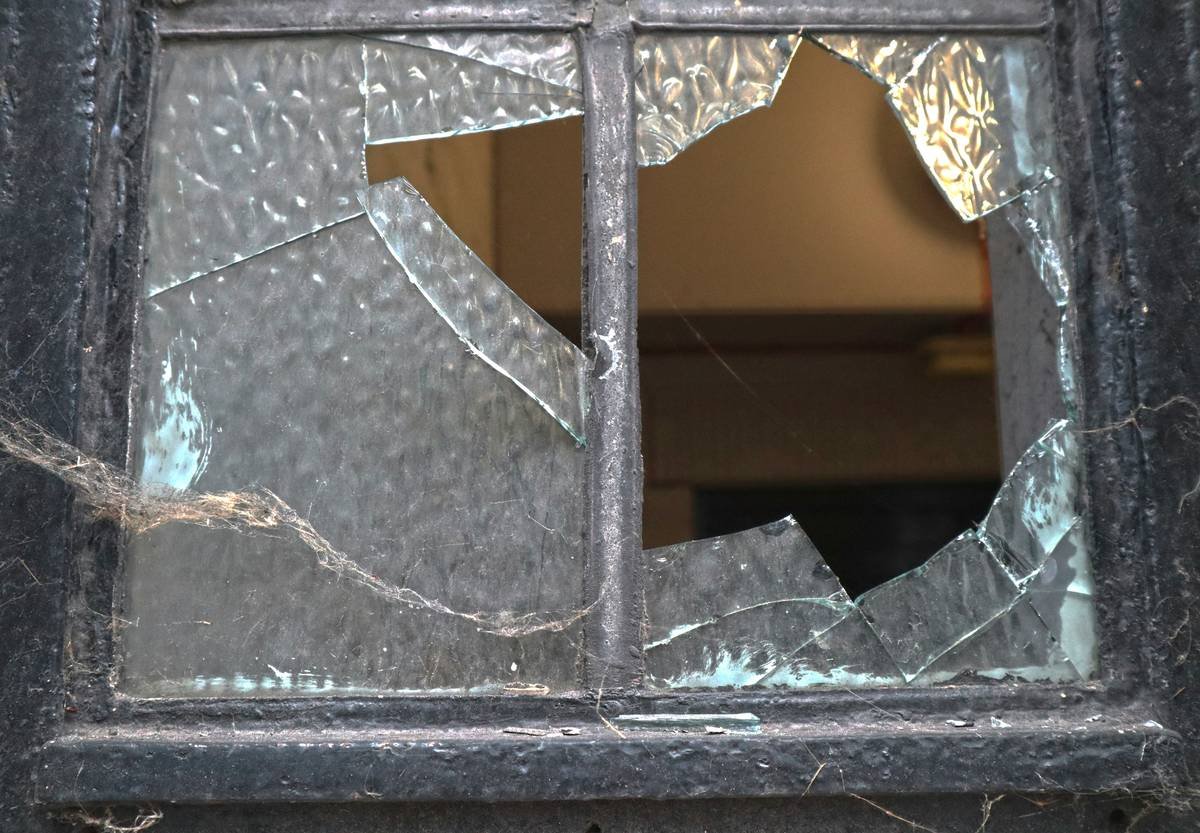
Ever wake up to shattered glass, an empty jewelry box, and that gut-punch realization your home was burglarized? You’re not just dealing with stolen stuff—you’re facing hours of calls, paperwork, and the emotional toll. And if you don’t file your claim right? You might get denied or underpaid. I’ve seen it happen—more times than I care to admit.
I’m a licensed insurance advisor with over 12 years in personal finance, specializing in property and casualty coverage. One client once waited two weeks to report a break-in because she “wanted to clean up first.” Her insurer flagged inconsistencies in her timeline… and denied $8,000 in claims. Don’t be her.
In this guide, you’ll get a battle-tested insurance claim checklist tailored to burglary situations. You’ll learn how to document evidence like a pro, avoid common pitfalls, and negotiate fairly with adjusters—all while protecting your mental bandwidth during an already stressful time.
Table of Contents
- Key Takeaways
- Why a Burglary Insurance Claim Checklist Actually Matters
- Your Step-by-Step Insurance Claim Checklist After a Break-In
- Pro Tips That Speed Up Payouts (and Prevent Denials)
- Real Case Study: How Maria Got Full Reimbursement
- Burglary Insurance Claim FAQs
- Final Thoughts
Key Takeaways
- Notify police and your insurer within 24–48 hours—delays raise red flags.
- Take timestamped photos/videos of damage before cleaning anything.
- Your insurance claim checklist must include receipts, police reports, and a detailed inventory.
- Standard homeowners policies cover burglary—but only if you prove loss and ownership.
- Never guess values; use current replacement cost, not what you paid years ago.
Why a Burglary Insurance Claim Checklist Actually Matters
Here’s the cold truth: insurers receive thousands of theft claims annually—and around 10% involve some form of fraud (Insurance Information Institute, 2023). As a result, they scrutinize every detail. Missing one item on your insurance claim checklist can delay payment for months—or trigger a denial.
I once advised a couple whose laptop, camera gear, and heirloom watch were stolen. They filed without a police report because “the cops said it was low priority.” Their claim sat in limbo for 67 days. When they finally got the report, the adjuster questioned why it was dated three weeks post-incident. Red flag = payout slashed by 40%.
Moral? Your documentation isn’t just paperwork—it’s your credibility.
Your Step-by-Step Insurance Claim Checklist After a Break-In
1. Is It Safe? Don’t Re-Enter Until Authorities Say So
If windows are broken or doors forced open, wait for police clearance. Tampering with a crime scene = bad for both investigation and your claim.
Optimist You: “I’ll just grab my backup hard drive real quick!”
Grumpy You: “Ugh, fine—but only if you wear gloves and take video *before* touching anything.”
2. File a Police Report—Within 24 Hours
This isn’t optional. Most insurers require an official report number. In fact, NAIC guidelines state that timely police involvement strengthens claim legitimacy.
3. Document Everything—Before Cleaning
Use your phone to record:
– Wide shots of entry points (broken window, kicked-in door)
– Close-ups of damaged locks or frames
– Empty spaces where items were stored
– Any discarded items left behind (gloves, tool marks)
Enable location + timestamp in your camera settings. Pro tip: narrate what you’re seeing (“This is my bedroom closet—my wedding ring was on the third shelf”).
4. Notify Your Insurer Immediately
Call your agent or use your carrier’s app. Have your policy number ready. Ask: “What’s the deadline to submit my claim?” Most standard policies give 30–60 days—but earlier = better.
5. Create a Detailed Inventory of Losses
List every stolen/damaged item with:
– Brand, model, serial number (if known)
– Purchase date and price
– Estimated current replacement value
– Proof of ownership (receipts, credit card statements, photos from before the burglary)
No receipt? Use Amazon order history, credit card records, or even social media posts (“Just unboxed my new Sony A7IV!”).
6. Submit Your Claim Package
Compile:
– Police report copy
– Photo/video evidence
– Inventory list with supporting docs
– Completed claim form (usually sent by insurer)
7. Track & Follow Up Weekly
Adjusters handle 100+ claims monthly. Set calendar reminders to email every 5 business days: “Checking on status of Claim #XXXXX.” Polite persistence works.
Pro Tips That Speed Up Payouts (and Prevent Denials)
- Don’t say “I think” or “maybe”—insurers interpret uncertainty as unreliability.
- Use replacement cost, not actual cash value, if your policy includes RCV coverage (most do for contents).
- Keep a digital backup of all documents in cloud storage (Google Drive, Dropbox).
- Ask about advance payments—many insurers offer partial reimbursement for urgent needs (e.g., temporary locks, hotel stay).
- Review your policy’s “duties after loss” clause—this section outlines exactly what you owe them.
🚫 Terrible Tip Alert: “Just estimate everything—it’ll be fine.”
Wrong. Guessing values screams amateur hour. One client wrote “TV: $500.” His 65” OLED actually cost $2,199. He got $320. Ouch.
Real Case Study: How Maria Got Full Reimbursement
Maria, a freelance photographer in Austin, returned from a weekend trip to find her studio ransacked. Thieves took two cameras ($4,200), lenses ($3,800), and her MacBook Pro ($2,400).
She did everything right:
– Called 911 within the hour
– Recorded a 3-minute walkthrough video before touching anything
– Pulled receipts from her American Express (which she used for all gear purchases)
– Submitted her claim within 48 hours
Result? Her insurer approved 100% of her $10,400 claim in 11 days. Why? Her documentation was so thorough, the adjuster had zero questions.
Sounds like your laptop fan during a 4K render—whirrrr—that’s the sound of a smooth claim process.
Burglary Insurance Claim FAQs
Does homeowners insurance cover burglary?
Yes—standard HO-3 policies include personal property coverage for theft, including burglary. But check your deductible and sub-limits (e.g., jewelry often capped at $1,500 unless scheduled).
How long do I have to file a claim?
Typically 30–60 days, but report immediately. Delays invite scrutiny. Some states (like California) allow up to 2 years, but waiting that long almost guarantees complications.
Will my rates go up after a claim?
Possibly—but statistically, one non-at-fault theft claim rarely causes a hike (Forbes, 2023). Multiple claims in 3 years? That’s riskier.
What if I don’t have receipts?
Use bank/credit card statements, product manuals, warranty cards, or even old photos showing the item in your home. Insurers accept “reasonable proof.”
Final Thoughts
A burglary is traumatic—but your insurance claim checklist shouldn’t be. By documenting meticulously, acting fast, and leaning on credible proof, you protect both your finances and your peace of mind.
Save this guide. Bookmark it. Tape it to your fridge if you must. Because when chaos hits, clarity pays.
Like a Tamagotchi, your claim needs daily care—or it dies.
Stolen silver gleams
Police report in hand tight—
Claim paid by Friday.